



























How to Get Rid of Dark Surgical Scars
After surgery, you might expect the scar to fade once the incision heals. But that doesn't always happen. The area can stay darker than the surrounding skin for months, appearing brown, red, or purple.
Dark surgical scars often fade with time, though the process can be slow. Sun protection and the right scar-care routine can help improve their appearance. Understanding what causes the discoloration is the first step toward choosing the right approach.
Why Do Surgical Scars Turn Dark
1. Post-Inflammatory Hyperpigmentation
If your skin gets inflamed or hurt, it produces some extra melanin which is responsible for the color of your skin. This phenomenon is referred to as post-inflammatory hyperpigmentation (PIH) (1).
PIH can leave a brown, dark brown, or even gray mark near the site where surgery was done. Such occurrence is relatively more frequent among individuals having medium to deeper complexioned skin, although it can affect anyone.
2. Normal Scar Maturation

New scars typically have a purple, red, or pink hue, which gradually shifts to a darker color that is consistent with the surrounding skin.
The scar tissue undergoes further transformation even when the skin has closed. A noticeable scar initially seen within the first couple of months might end up becoming less apparent and even flat over the following year or longer.
3. Sun Exposure
Exposure of new scars to sunlight tends to make them appear darker (2). This is due to the fact that ultraviolet rays stimulate the production of pigment in the skin.
Scars found on areas such as the chest, arms and legs are subjected to direct sunlight during the day, even if you are not conscious of it. This can put your scar at risk.
4. Individual Healing and Skin Color
Your natural skin tone, genetics, age, incision location and the type of surgery all influence how a scar develops. Individuals with deeper complexions are more prone to certain types of inflammation-induced pigmentation and raised scars.
Some people develop a thin, faint line after surgery. Others develop a wider, darker, or raised scar despite following the same aftercare instructions.
It’s important to note that dark discoloration and scar elevation are not the same. Dark, brown scars are mainly pigmentation issues, while thick, raised scars are caused by other factors. Sometimes a scar can be both raised and brown.
How Long Does It Take for Dark Surgical Scars to Fade
There is no single timeline for every surgical scar. The age of the scar, its depth, your skin tone and the cause of the discoloration all make a difference.
|
Time after surgery |
What to expect |
|
First few weeks |
The incision is still healing. Redness, tenderness and changes in skin color are common. Focus on proper wound care. |
|
Around 2-6 months |
The scar may begin to fade, but brown or dark patches can remain, especially after sun exposure. |
|
Around 6-12 months & beyond |
The scar may gradually soften and lighten. Some scars take longer to fade and a visible mark may remain. |
Note: These timeframes are general guides, not deadlines.
Effective Ways to Care for Dark Surgical Scars
1. Protect Your Scar From the Sun
- Apply broad-spectrum SPF 30 or higher to healed skin before going outdoors
- Reapply as directed, especially after sweating or swimming
- Cover the scar with clothing when possible
- Protect the scar for at least a year, or until the discoloration fades
Tip: If sunscreen leaves a white cast, try a tinted formula.
2. Use Silicone Scar Gel or Sheets
Silicone gel and sheets are very effective for the management of raised, firm and red scars. These help in maintaining the hydration around the scar and may also improve scar appearance with time.
Here are the tips for using silicone-based scar care products:
- Wait until your cut has fully healed and dried up
- Clean and dry your skin first, then apply the product
- Follow the product's directions for application time and frequency
- Use it consistently for several weeks to months, as instructed
- Seek advice if you develop a rash, persistent irritation, or skin breakdown
Use silicone gel if the area moves a lot and the sheets do not stay in place. Sheets can be convenient for scars on relatively flat areas of skin.
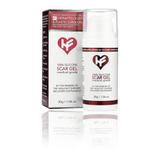
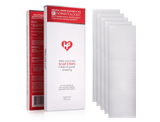
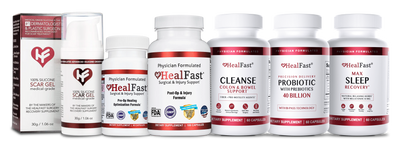
Tip: HealFast offers dermatologist-approved, medical-grade silicone scar gel and sheets with surgery-safe formulas designed for both new and old scars.
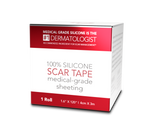
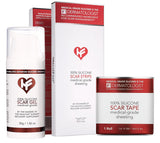
For a complete scar-care routine, our Scar Care Bundle includes gel, sheets and silicone tape. The tape is especially useful for scars on longer areas of the body, such as the abdomen, arms, or legs, where extra coverage can make application easier.

3. Keep Your Skin Moisturized and Prevent Irritation
Once your incision has healed, wash the area gently and apply a fragrance-free moisturizer if the skin feels dry or tight.
Avoid scrubbing or rubbing the scar, as irritation can make dark marks worse.
Note: Avoid petroleum jelly-based products unless your healthcare provider recommends them.
4. Consider Ingredients That Target Dark Spots
If the incision is fully healed and the scar is flat but brown or darker than the surrounding skin, your dermatologist might suggest using scar creams for treating discoloration due to an overproduction of melanin (3).
The right ingredient depends on your skin, the cause of the discoloration and how sensitive the area remains.
|
Ingredient |
What it may help with |
|
Azelaic acid |
Certain forms of post-inflammatory hyperpigmentation |
|
Vitamin C |
Uneven pigmentation and overall skin tone |
|
Retinoids |
Some forms of hyperpigmentation by increasing skin cell turnover |
|
Hydroquinone |
Selected cases of persistent hyperpigmentation |
Note: Use these ingredients under a dermatologist's guidance, as each works differently and has specific precautions. Some can irritate the skin, potentially worsening discoloration if not used appropriately.
Related Articles:
How Different Skin Types Affect Scar Formation After Surgery
How to Care for Scars in High-Movement Areas
FAQs
Q1. Can I use vitamin C or retinol on a surgical scar?
You can try, but only after your skin is healed and if the product is appropriate for your skin. Both of these can potentially be irritating and should be used with caution.
Q2. Do dark surgical scars become less visible sooner when found on fair skin?
No, pigmentation issues are the same for people of all skin tones. Darker skin is more susceptible to post-inflammatory hyperpigmentation and can take longer to fade.
Q3. Should I massage a dark surgical scar?
While massage might contribute to increased flexibility of the scar tissue after recovery, it won't affect pigmentation. Be sure to stick to your surgeon’s guidelines regarding massage.
References:
1. StatPearls. (n.d.). Postinflammatory hyperpigmentation. National Center for Biotechnology Information. https://www.ncbi.nlm.nih.gov/books/NBK559150/
2. Cleveland Clinic. (2022, April 12). Scars: Causes, treatment, and prevention. https://my.clevelandclinic.org/health/diseases/11030-scars
3. Kazemeini, S., Nadeem-Tariq, A., Luthra, A., Suha, R., Turna, A., Easterly, J., Pokharel, S., Muqaddas, S., & Kazemeini, M. (2025). Evidence-based topical therapy for facial scars in diverse skin types. Cureus, 17(6), e86343. https://pmc.ncbi.nlm.nih.gov/articles/PMC12275165/


Medical-grade Silicone Scar Gel "Semi-Solid Sheeting"
MEDICAL GRADE SILICONE SCAR GEL | From the Makers of the Industry-leading HealFast Surgery Recovery...
$23.99
Shop Now