







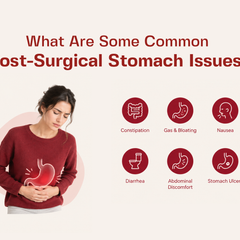

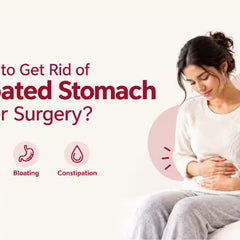






After a procedure, you may experience some normal changes, like pain and swelling. Bloating is also common, but it can leave your stomach feeling unusually tight, full and uncomfortable, even when you haven't eaten much.
Changes in your diet, constipation and pain medicines, in addition to reduced physical activity and anesthesia, can all slow your digestive system. The good news? Mild bloating often eases as your digestion slowly returns to normal.
Why Is My Stomach Bloated After Surgery
There are a few possible reasons and sometimes more than one is happening at the same time.
|
Possible cause |
What you might notice |
|
Gas |
Fullness, pressure, burping or passing gas |
|
Constipation |
Hard stools, fewer bowel movements, abdominal discomfort |
|
Less movement |
Slower digestion and more time sitting or lying down |
|
Pain medicines |
Some medicines can slow your bowels |
|
Diet changes |
Foods that normally feel fine may bother you during recovery |
|
Laparoscopic surgery |
Temporary gas-related abdominal or shoulder discomfort |
After surgery, your digestive system can be a little slower than usual (1). Anesthesia & some pain medicines can affect bowel movements, while staying in bed more than usual can add to the problem.
How to Relieve Bloating After Surgery
There are no fast and easy fixes for bloating after surgery. Here are a few tips to get your digestive system moving again.
1. Take short walks
If your surgeon is OK with you walking, try to do a few short walks throughout the day.
You don't need a workout. Walk around your room, your house, or the hallway for a few minutes at a time. Even small amounts of movement can be helpful when you're spending more time sitting or lying down.
And honestly, don't push yourself just because walking is good for you. You're recovering from surgery.
2. Drink water throughout the day
Dehydration can make constipation worse, which can make bloating worse too.
Keep drinking fluids throughout the day unless your doctor has told you to restrict them.
3. Eat smaller meals
Your stomach may struggle with a large meal.
Try smaller portions and eat slowly. You can gradually return to your normal eating pattern as your appetite & digestion improve.
Check out: What to Eat Before and After Surgery for Faster Recovery.
4. Limit gas producing foods
Some foods and fizzy drinks can make gas and bloating worse.
You don't have to completely change your diet. Just pay attention to how you feel after eating.
5. Get constipation under control
Constipation can add to the pressure and bloating after surgery. Check with your surgeon before taking a laxative, stool softener, or fiber supplement.
6. Give your body some time
This part is easy to forget.
Your body has just been through surgery. Your digestion doesn't necessarily return to normal at the same speed as your energy or appetite.
If the bloating is slowly improving, that's generally more reassuring than bloating that keeps getting worse.

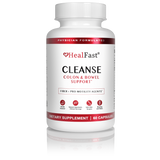
Take HealFast Cleanse for Bloating and Constipation
Bloating is often caused by constipation. Supporting normal bowel function may help relieve the heavy, bloated feeling.
Our Bowel and Colon Cleanse Supplements are formulated with fiber and digestive-support ingredients, including psyllium husk, oat, alfalfa and Lactobacillus acidophilus. It's designed to support bowel regularity and digestive comfort, which can be useful when constipation is contributing to bloating.
Some ingredients in Cleanse, including stimulant laxative herbs, may not be appropriate for everyone during recovery. So, always check with your surgeon before taking.

How Long Does Your Stomach Stay Bloated After Surgery
It depends on the type of surgery, your medications, bowel movements, activity level, diet and how your body reacts.
For some people, the bloating starts to settle within a few days. After abdominal or bowel surgery, though, changes in digestion and bowel movements can take longer.
|
Possible reason |
Estimated time |
|
Gas from laparoscopic surgery |
Often improves within 24-72 hrs |
|
Mild constipation |
Often improves within a few days, once bowel movements return to normal |
|
Medication-related constipation |
Can last several days or longer while taking the medication |
|
Digestive changes after abdominal or bowel surgery |
Can take days to several weeks, depending on the procedure and recovery |
|
General post-surgery bloating |
Often settles gradually over several days to a few weeks |
Don't focus only on how many days you've been bloated. Pay attention to whether things are getting better, staying the same, or getting worse.
When Is Bloating Not Normal After Surgery
Get medical care if you experience:
- Extreme or worsening abdominal pain
- Increasing abdominal swelling
- Repeated vomiting
- Fever or chills
- Trouble keeping food or fluids down
- Inability to pass gas
- Weakness, dizziness, or difficulty breathing
Simple Routine for Post-Surgery Bloating
The following habits can help you manage bloating:
Morning:
Drink some water → have a light breakfast → take a short walk
During the day:
Eat smaller meals → keep drinking fluids → get up and move around regularly
At night:
Have a lighter meal if large meals make you uncomfortable → follow your prescribed medications → pay attention to your bowel movements
Related Articles:
Post-Surgery Fatigue: Causes, Recovery Tips and When to Worry
Prebiotics vs Probiotics: Which Supports Healing Better
FAQs
1. Can I take carbonated drinks if I have bloating after surgery?
It may be better to limit carbonated drinks if they make you feel more bloated or gassy (2).
2. Can you massage your stomach to relieve post-surgical bloating?
It depends on your surgery and where you’re in the recovery stage. Gentle abdominal massage can sometimes help with ordinary gas or constipation, but you shouldn't massage newly operated areas.
3. Is bloating worse at night?
It may feel worse at night after eating throughout the day or resting more. If the swelling is consistently getting worse, let your healthcare provider know.
References:
1. Mari, A., Abu Backer, F., Mahamid, M., Amara, H., Carter, D., Boltin, D., & Dickman, R. (2019). Bloating and abdominal distension: Clinical approach and management. Advances in Therapy, 36(5), 1075–1084. https://pmc.ncbi.nlm.nih.gov/articles/PMC6824367/
2. Everyday Health. (n.d.). 7 drinks that can cause gas and bloating. https://www.everydayhealth.com/digestive-health/drinks-that-cause-gas-bloating/

Probiotic 40 Billion CFU with Prebiotics
Made to order - Probiotic 40 Billion with Prebiotics is a blend of four probiotic...
$24.99
Shop Now