



















If you have a scar that's been healed for years, you probably don't spend much time thinking about it. Once a wound closes and the scar settles, it feels like that chapter is over.
But what if one day the area starts feeling sensitive, cracks, or even appears to reopen? Can a scar really break open years after your injury or surgery?
The short answer is yes, although it's not very common.
Even though scar tissue is strong enough to cover and protect an old wound, it never fully goes back to being like regular skin. Because it isn't as flexible as normal skin, things like a sudden bump, constant stretching, aging, or health issues can make an old scar give way and split.
Understanding why this happens can help you protect your skin and know when it's time to seek medical attention.
Primary Causes of Mature Scar Breakdown

1. Recurrent Trauma to the Affected Tissue
Because healed wounds never regain the full tensile strength of normal skin, they are far more susceptible to tearing under physical stress. Experiencing a physical mishap that forces sudden friction over the area, or a secondary surgical incision in the exact same location, can readily disrupt the old tissue interface.
2. High Mechanical Tension and Stretching
Scars located on high movement areas, such as the knees, elbows, shoulders, or abdomen, are subject to continuous mechanical stress.
In some cases, significant weight gain, pregnancy, heavy lifting, or repetitive motions may increase tension on an old scar and make it more susceptible to damage.
3. Changes That Come With Aging
As you get older, your skin naturally loses collagen and elasticity.
This doesn't just affect healthy skin, it can affect old scars as well.
A scar that seemed strong and stable years ago may become thinner and more fragile over time. While this doesn't mean it will automatically reopen, aging can make scar tissue less resilient over time.
4. Infection
Although rare, an infection can sometimes develop in or around scar tissue (1).
If this happens, your skin may become inflamed and weakened, increasing the risk of the scar opening.
You should pay attention if you notice:
I. Redness around the scar
II. Swelling
III. Warmth
IV. Drainage or pus
V. Increasing pain
Check Out: Is Redness Around a Surgical Incision Normal or a Sign of Infection?
5. Underlying Health Conditions
Certain medical conditions can affect your skin's ability to stay healthy and repair itself. Some conditions may also reduce blood circulation, limiting the oxygen and nutrients your skin needs to remain strong.
These may include:
a) Diabetes
b) Autoimmune disorders
c) Connective tissue disorders
d) Nutritional deficiencies
e) Long-term steroid use
f) Vascular or circulation disorders
How Specific Health Conditions Impact Old Scars:
|
Condition or Factor |
Impact on Scar Tissue |
|
Diabetes |
Spikes in blood sugar can damage small blood vessels. This cuts down the circulation needed to keep old scar tissue healthy and strong. |
|
Autoimmune Disorders |
These conditions can cause the body to accidentally attack its own healthy tissue, which sometimes weakens the collagen holding an old scar together. |
|
Poor Circulation |
When blood flow to your arms or legs drops, your skin misses out on the steady supply of oxygen it needs to maintain tough, older tissue. |
|
Nutritional deficiencies |
Missing out on key vitamins and minerals means your body doesn't have the raw ingredients it needs to patch up and maintain everyday wear and tear on your skin. |
|
Long-Term Steroid Use |
Using steroid medications for a long time thins out your skin layers. This directly blocks the cells that keep your scar tissue firm and flexible. |
If your body struggles to maintain healthy tissue or provide adequate blood flow to the area, an old scar may be more vulnerable to breakdown or reopening.
Learn How Blood Sugar Levels Affect Surgical Healing.
Tips to Reduce the Risk of a Scar Reopening
While it's not always possible to prevent a scar from reopening, there are steps you can take to help reduce the risk:
1) Take extra care to protect older scars from new injuries or repeated friction.
2) Keep the skin around your scar moisturized to help prevent dryness and maintain flexibility.
3) Eat a balanced diet rich in protein, vitamin C, and zinc to support healthy skin and connective tissue (2).
4) Manage underlying health conditions, such as diabetes or circulation disorders, that can weaken skin and scar tissue over time.
5) Avoid smoking, as it can reduce blood flow and affect your skin's ability to maintain healthy tissue.
6) Watch for changes in older scars, such as redness, thinning, cracking, pain, or increased sensitivity.
7) Continue following any long-term scar care recommendations provided by your healthcare professional.
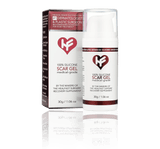
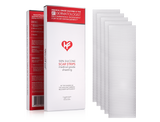
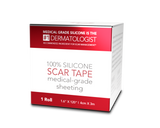
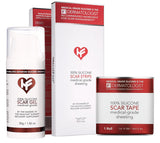
Note: For older scars, integrating targeted medical-grade silicone products into your routine can provide an extra layer of protection. HealFast offers Scar Care Products to help maintain the skin's moisture barrier and protect the tissue from daily wear and tear.

Depending on the location and size of your scar, different options can help keep the area stable:
-
Silicone Scar Sheets: These work best on flat, still areas like your stomach or thighs. They mimic the natural barrier of healthy skin, locking in deep moisture while keeping your clothes from constantly rubbing against the scar.
-
Silicone Scar Tape: If your scar is right over a joint that constantly bends, like a knee, elbow, or shoulder, a silicone tape roll is your best option. You can cut exactly what you need to wrap around the curves of your joints, giving you flexible support and steady compression while you move.
-
Silicone Scar Gel: For scars on your face, hands, or bumpy areas where a physical sheet just won't stay put, scar gel is the easiest fix. It dries fast into an invisible layer that keeps the tissue soft and flexible without feeling tight when you move.
What Should You Do If an Old Scar Reopens
|
Situation |
What You Should Do |
|
Your scar has just reopened |
Wash the area gently to help reduce the risk of infection. |
|
The wound is exposed |
Cover it up with a clean, sterile bandage. This protects the open skin from dirt, bacteria, and clothing rubbing against it. |
|
The area is bleeding |
Apply gentle pressure with a clean cloth or dressing until the bleeding stops. |
|
You notice redness, swelling, warmth, or drainage |
Contact a healthcare professional, as these may be signs of infection. |
|
The wound is deep, widening, or not improving |
Seek medical attention promptly to determine whether additional treatment is needed. |
More Helpful Guides:
HealFast vs ScarAway vs Mederma vs Biocorneum: Best Scar Gel Comparison
Internal vs External Scar Tissue: How They Form and Heal Differently?
What Is Silicon Dioxide and How Does It Help in Scar Healing?
FAQs
1. Does scurvy cause historical scars to reopen?
Yes. Scurvy is a severe, prolonged deficiency of Vitamin C (ascorbic acid) (3). Because ascorbic acid is a mandatory cofactor for collagen synthesis, the body becomes unable to maintain existing collagen structures when depleted. Consequently, old scars can lose their structural integrity and break down.
2. Is long-term scar care necessary after the wound closes?
Yes. The remodeling phase of a scar continues beneath the surface for up to a year or longer. Even after this period, practicing sun protection and maintaining skin hydration helps preserve the long-term elasticity and health of the tissue.
3. Are surgical incisions more likely to separate than lacerations?
Not inherently. However, the risk increases if the surgical incision was high-tension, located over a joint, or experienced healing complications, such as a surgical site infection or delayed healing, during the initial recovery phase.
4. Do scars reopen by themselves?
No, scars rarely open up without a reason. If an old scar breaks down, there is almost always a clear cause behind it. Usually, it happens because of an injury to the area, constant stretching, a localized infection, or a health condition that weakens your skin over time.
References:
1. MedlinePlus. (2025, June 20). Necrotizing soft tissue infection. U.S. National Library of Medicine. https://medlineplus.gov/ency/article/007645.htm
2. National Institutes of Health Office of Dietary Supplements. (2024, April 11). Vitamin C: Fact sheet for health professionals. U.S. Department of Health and Human Services. https://ods.od.nih.gov/factsheets/VitaminC-HealthProfessional/
3. Niknejad, M., & Knipe, H. (2026). Hypovitaminosis C (scurvy). Radiopaedia. https://radiopaedia.org/articles/hypovitaminosis-c-scurvy-1


HealFast Complete Surgery & Injury Formula (PreOp + PostOp)
OPTIMIZE RECOVERY & SUPPORT HEALING from surgery, injury, and extreme sports with the most comprehensive...
$99.99
Shop Now