










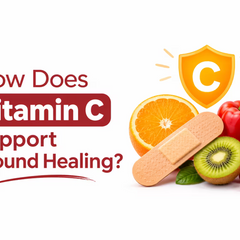









A small cut, surgical incision or any other kind of injury might seem small, but your body has to go through a number of steps to fix that tissue. Nutrition can help in this process, specifically vitamin C.
Vitamin C helps in the production of Collagen (1), a strong immune booster and helps tissue repair. These functions make vitamin C an essential component of wound healing.
So, does vitamin C heal wounds faster? And should you be taking a vitamin C supplement for wound healing?
In this article, we will explore how vitamin C works, its benefits during recovery, the best food sources and when supplementation might be helpful.
Role of Vitamin C in Wound Healing
1. Aids in Collagen Formation
Collagen is one of the main building blocks of skin & connective tissue (2). It‘s made by your body to repair injuries and close up wounds.
Enzymes involved in the production of collagen require vitamin C. Without enough vitamin C, collagen production and maturation can be affected, which can hurt the formation and maintenance of healthy connective tissue. This is especially important during the proliferative phase of wound healing.
Also Read: Collagen vs. Collagen Peptides: Which Is Best for Scar Healing?
2. Supports Immune Function
Your immune system helps protect an injured area while your body repairs it. White blood cells move to the wound to help control microorganisms & clear damaged cells.
Vitamin C supports several immune cell functions (3), including the activity of white blood cells. It also helps protect these cells from oxidative damage.
3. Helps Protect Cells From Oxidative Stress
Wound Healing involves Inflammation, which is a natural part of your body's response to injury. Cells produce reactive oxygen species during this process.
While these molecules are part of the immune and healing processes, too much oxidative stress will result in the deterioration of other cells & tissues nearby.
Vitamin C protects against oxidative damage (4). This vitamin can help reduce free radical damage and protect cells, supporting an environment for tissue repair.

4. Supports New Tissue Formation
When you get hurt, your body starts making new tissue to fill the gap. This step needs help from fibroblasts, specialized cells that produce collagen and other supporting skin tissue.
Vitamin C supports healthy fibroblast function and collagen production.
5. Maintains Skin and Connective Tissue Function
Vitamin C helps keep your skin, blood vessels, cartilage and other connective tissue healthy.
It contributes to:
- Collagen formation
- Tissue structure
- Tissue strength
What is the Vitamin C requirement for healing wounds
Vitamin C doses are based on your age, sex and other health conditions.
According to the National Institutes of Health (NIH), the recommended daily intake for most adults is as follows:
(5)
|
Group |
Recommended daily vitamin C |
|
Adult men |
90 mg |
|
Adult women |
75 mg |
|
Pregnant women |
85 mg |
|
Breastfeeding women |
120 mg |
|
Adults who smoke |
125 mg (men), 110 mg (women) |
These amounts represent general daily requirements, not specific doses for wound healing.
The tolerable upper intake level for adults is 2,000 mg per day from all sources. This is a safety limit, not a recommended target for recovery.
Best Food Sources of Vitamin C for Wound Healing
You can get vitamin C from a variety of fruits and vegetables. Including these foods in your daily meals can help you maintain adequate vitamin C levels.
|
Food |
Approximate vitamin C per serving |
|
Red bell pepper (½ cup, raw) |
95 mg |
|
Orange (1 medium) |
70 mg |
|
Kiwi (1 medium) |
64 mg |
|
Strawberries (½ cup) |
49 mg |
|
Broccoli (½ cup, cooked) |
51 mg |
|
Brussels sprouts (½ cup, cooked) |
48 mg |
Note: Values are approximate and can vary with serving size, freshness and preparation.
Some simple ways to include vitamin C in your diet are:
- Add fresh bell peppers to salads and sandwiches
- Eat an orange or kiwi as a snack
- Include strawberries with breakfast
- Add broccoli or Brussels sprouts to your meals
- Include a variety of fruits and vegetables throughout the day
Vitamin C can be reduced by prolonged storage and cooking (6), so eating some vitamin C-rich foods raw or lightly cooked can help preserve their nutrient content.
Should You Take a Vitamin C Supplement for Wound Healing
A balanced diet is usually enough to meet your daily vitamin C requirements. However, some people may not get enough through food alone.
A vitamin C supplement may be worth discussing with a healthcare professional if you:
1) Have a limited or restrictive diet
2) Eat very few fruits and vegetables
3) Have a diagnosed vitamin C deficiency
4) Are recovering from surgery and have difficulty meeting your nutritional needs
5) Have a condition that affects nutrient absorption
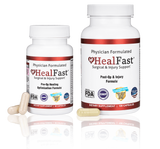
How Does HealFast Support Wound Healing With Vitamin C
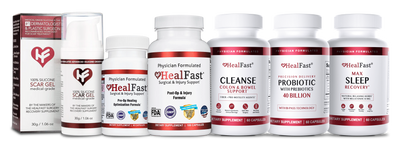
Post-surgery Healing supplements from HealFast combine vitamin C with other key nutrients that promote healing using your body's own healing mechanisms, including:
- Glutamine
- Arginine
- Citrus Bioflavonoids
- Probiotics
- Zinc
- Vitamin B Complex
- Vitamin A
- Bromelain
- Quercetin
- Magnesium
- Selenium
- Folate
- Copper
Together, these ingredients support collagen production, immune function, tissue repair and other important processes involved in surgical recovery.

Can You Take Too Much Vitamin C
Although vitamin C is water-soluble (1), taking excessive amounts can cause unwanted side effects.
High vitamin C supplemental doses can cause:
1. Nausea & stomach cramps
2. Diarrhea
3. Digestive discomfort
4. An increased risk of kidney stones in some susceptible individuals
Related Articles:
What Happens If You Don't Care for a Surgical Wound Properly
Zinc and Wound Healing: What Patients Should Know
Dos and Don’ts for Scar Care After Surgery
Additional Ways to Help Wound Healing
- Keep the wound clean
- Eat well
- Drink enough water
- Get adequate sleep
- Avoid smoking
- Follow wound-care instructions
If you notice increasing redness, swelling, warmth, worsening pain, pus or fever, contact your healthcare provider.
References:
1. National Institutes of Health, Office of Dietary Supplements. (2025, July 31). Vitamin C: Fact sheet for health professionals. https://ods.od.nih.gov/factsheets/VitaminC-HealthProfessional/
2. Cleveland Clinic. (2022, May 23). Collagen: What it is, types, function & benefits. https://my.clevelandclinic.org/health/articles/23089-collagen
3. Carr, A. C., & Maggini, S. (2017). Vitamin C and immune function. Nutrients, 9(11), 1211. https://pmc.ncbi.nlm.nih.gov/articles/PMC5707683/
4. Popovic, L. M., Mitic, N. R., Miric, D., Bisevac, B., Miric, M., & Popovic, B. (2015). Influence of vitamin C supplementation on oxidative stress and neutrophil inflammatory response in acute and regular exercise. Oxidative Medicine and Cellular Longevity, 2015, Article 295497. https://pmc.ncbi.nlm.nih.gov/articles/PMC4352897/
5. National Institutes of Health, Office of Dietary Supplements. (2021, March 22). Vitamin C: Fact sheet for consumers. https://ods.od.nih.gov/factsheets/VitaminC-Consumer/
6. Effect of alternative preservation steps and storage on vitamin C stability in fruit and vegetable products: Critical review and kinetic modelling approaches. (2021). Foods, 10(11), 2630. https://pmc.ncbi.nlm.nih.gov/articles/PMC8619176/

HealFast Complete Surgery & Injury Formula (PreOp + PostOp)
OPTIMIZE RECOVERY & SUPPORT HEALING from surgery, injury, and extreme sports with the most comprehensive...
$99.95
Shop Now
HealFast Surgery & Injury Recovery Formula
OPTIMIZE RECOVERY & SUPPORT HEALING from surgery, injury, and extreme sports with the most comprehensive...
$39.95
Shop Now