


















Whether the scars result from surgery, burns, or injuries, silicone is often considered one of the most trusted ingredients for improving scar appearance. Medical-grade silicone sheets and gels are widely recommended to help flatten, soften, and fade scars over time. But when you read the ingredient label closely, you may also see silicon dioxide listed.
Let’s break down what silicon dioxide actually is and understand why this ingredient is used in scar healing formulations.
What Is Silicon Dioxide?
Silicon dioxide, also known as silica, is a natural compound made from silicon and oxygen (chemical formula: SiO₂). It is one of the most common minerals found on Earth. In fact, sand and quartz are largely composed of silicon dioxide.
For skincare and medical use, silicon dioxide is purified and processed into a fine, cosmetic-grade material.
Note: It is important to understand that silicon dioxide is chemically and functionally different from silicone. Silicone is a flexible, synthetic polymer widely used in scar care products for its protective and hydrating properties. In contrast, silicon dioxide is a mineral-based ingredient that primarily supports formulation stability, texture, and overall product performance rather than acting as a direct scar-modifying agent.
Why Is Silicon Dioxide Included in Scar Products?
Scar healing depends on creating the right environment for the skin to repair and rebuild properly. After surgery or injury, the body moves through four key stages of healing:
- Haemostasis
- Inflammation
- Tissue formation (proliferation)
- Scar remodeling
The scar remodeling phase is especially important for the long-term appearance of scars. During this stage, collagen fibers reorganize, strengthen, and gradually mature. If this process is disrupted by excessive dryness, ongoing irritation, or uncontrolled moisture levels, collagen may form in a disorganized way, leading to raised, thick, or uneven scars.
Silicon dioxide is included in scar care formulations primarily to support this remodeling stage. By helping regulate surface moisture and improving formulation stability, it contributes to a more balanced hydration environment. This controlled hydration helps minimize excessive dryness while preventing surface maceration, allowing collagen to reorganize more uniformly during scar maturation.
| Scar Healing Phases | Primary Processes | SiO₂ Role |
|---|---|---|
| Haemostasis (Phase 1) | Platelet aggregation, clot formation | Silica surface promotes platelet adhesion |
| Inflammation (Phase 2) | Macrophage recruitment, cytokine release | Modulates TGF-β1 to reduce excess inflammation |
| Proliferation (Phase 3) | Fibroblast activity, collagen deposition, angiogenesis | Stimulates fibroblast proliferation and collagen Type I synthesis |
| Remodelling (Phase 4) | Cross-linking, scar maturation, and tensile strength | Organises collagen fibres into parallel bundles, reducing scar thickness |
Learn How Inflammation Impacts Scar Maturation?
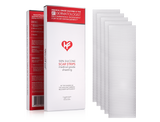
Worth Noting: HealFast offers medical-grade silicone scar sheets formulated with clinically trusted ingredients to support optimal scar healing. Our scar strips are made with high-quality dimethicone (medical-grade silicone), enhanced with silicon dioxide on a silicone base, and supported by a flexible elastomer backing for comfort and durability.
This carefully designed scar care formulation helps create a protective, well-hydrated environment over healed skin, supporting smoother, flatter, and softer-looking scars over time.

Key Clinical Benefits of Silicon Dioxide (SiO₂) in Scar Management
Silicon dioxide (SiO₂) plays a supportive yet important role in modern scar care products. By helping maintain optimal surface hydration, enhancing product stability, and contributing to a controlled healing environment, it supports balanced collagen remodeling during scar maturation.
1. Reduction in Scar Height, Volume, and Redness
Clinical studies on silicone gels and sheets show that consistent use can help flatten raised scars and gradually reduce redness (erythema). By maintaining optimal hydration and controlling excessive collagen production, silicon dioxide helps guide scar tissue to mature in a more balanced and organized way. Research has demonstrated significant visible improvements, with reports noting up to approximately 80–85% improvement in scar texture and color, and meaningful reduction in scar height in many cases (1).
2. Decreased Itching Associated With Active Hypertrophic Scars
Active or raised scars are often accompanied by itching due to inflammation and increased nerve sensitivity in healing tissue. SiO₂ supports the structural integrity and performance of topical scar formulations, helping maintain a consistent and breathable barrier on the skin.
This controlled microenvironment reduces transepidermal water loss and minimizes irritation, which can significantly decrease pruritus and improve overall comfort during scar maturation.
Check Out: How to Treat Itchy or Painful Scars After Pregnancy-Related Surgery?
3. Prevention of Keloid Recurrence
In individuals prone to keloid formation, recurrence after surgical excision is a recognized concern. When silicon dioxide is included in silicone-based scar formulations, it supports product stability and helps maintain a controlled, well-hydrated skin surface environment.
When this topical approach is combined with pressure therapy under medical supervision, the structured healing environment may assist in regulating collagen activity and supporting more balanced scar remodeling.
4. Improved Pliability and Softness of Mature Scar Tissue
As scars mature, they can feel firm, tight, or rigid. This stiffness results from dense collagen bundles forming within the scar tissue. Consistent use of scar care products formulated with silicon dioxide supports proper hydration and collagen organization, helping the tissue gradually become softer and more flexible.
Improved pliability is especially beneficial for scars located on joints or areas that move frequently, as it enhances comfort and mobility.
5. Acceleration of the Transition From the Proliferative to the Remodeling Phase
Scar healing progresses through several phases, and prolonged collagen production during the proliferative phase can increase the risk of raised scars. Balanced hydration and controlled inflammation help the skin transition more smoothly into the remodeling phase, where collagen fibers reorganize and strengthen.
6. Non-Invasive and Well-Tolerated Across Skin Types
Silicon dioxide is non-invasive, easy to use, and generally well-tolerated across different skin types. Compared to procedures like steroid injections, laser treatments, or surgical revision, topical silicon-based products offer a lower-risk option for long-term scar management.
Related Articles -
Dos and Don’ts for Scar Care After Surgery
How to Care for Scars in High-Movement Areas?
Why Do Surgical Scars Feel Lumpy? Is It Normal?
Frequently Asked Questions
1. Does Silicon Dioxide Directly Remove Scars?
Silicon dioxide does not “remove” scars. Instead, it maintains a stable, well-hydrated surface environment. Proper hydration plays an important role in collagen organization during scar remodeling, which can improve the scar’s appearance over time.
2. How Long Should Silicon Dioxide–Containing Scar Products Be Used?
Scar maturation can take several months. Most scar care regimens recommend consistent use of silicone for at least 8–12 weeks, and in some cases longer, depending on scar type and individual healing response (2).
3. Is Silicon Dioxide Safe for Sensitive Skin?
Yes. Medical-grade silicon dioxide is widely used in skincare and medical formulations and is generally well tolerated.
Reference:
1. Mustoe, T. A., Cooter, R. D., Gold, M. H., Hobbs, F. D., Ramelet, A.-S., Shakespeare, P. G., … & Sahar, D. E. (2002). International clinical recommendations on scar management. Plastic and Reconstructive Surgery, 110(2), 560–571. https://pmc.ncbi.nlm.nih.gov/articles/PMC2918339/
2. Prequel Skin. (n.d.). Silicone for scars: What science says about scar treatment. Prequel Skin. https://prequelskin.com/blogs/skin-notes-skincare-blog/silicone-for-scars


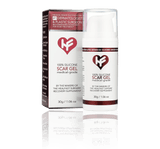
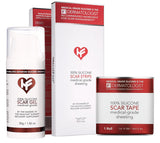
Medical-grade Silicone Scar Gel "Semi-Solid Sheeting"
MEDICAL GRADE SILICONE SCAR GEL | From the Makers of the Industry-leading HealFast Surgery Recovery...
$23.99
Shop Now